
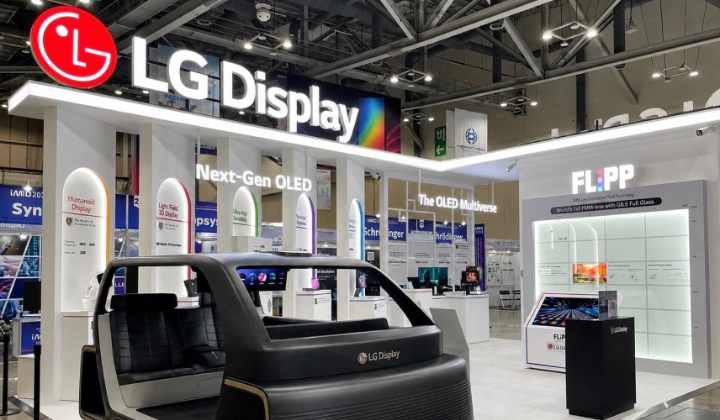

LG Display has just shown off a new OLED patterning method called FLiPP (FMM-Less innovative Pixel Patterning) at the International Meeting on Information Display (IMID) 2026 event in South Korea, and it completely throws out the traditional Fine Metal Mask (FMM) approach to making screens.
By getting rid of that physical stencil, LG reckons it can boost the screen’s light-emitting area by around 55%. That translates to some serious gains: displays could end up 1.6 times brighter, last up to 2.4 times longer, or draw 13% less power.
Normal RGB OLED manufacturing relies on a metal mask as a template to deposit red, green, and blue pixels onto the glass. The problem is that these masks get floppy and sag on bigger glass sheets, and you need a custom mask for every single screen size and resolution. FLiPP dodges this by laying down the RGB materials one after another, fixing them in place, and then using photolithography with UV light to etch away the leftover bits. LG has already managed to process an entire massive 8.5-gen glass sheet in one go, rather than cutting it into smaller pieces first.
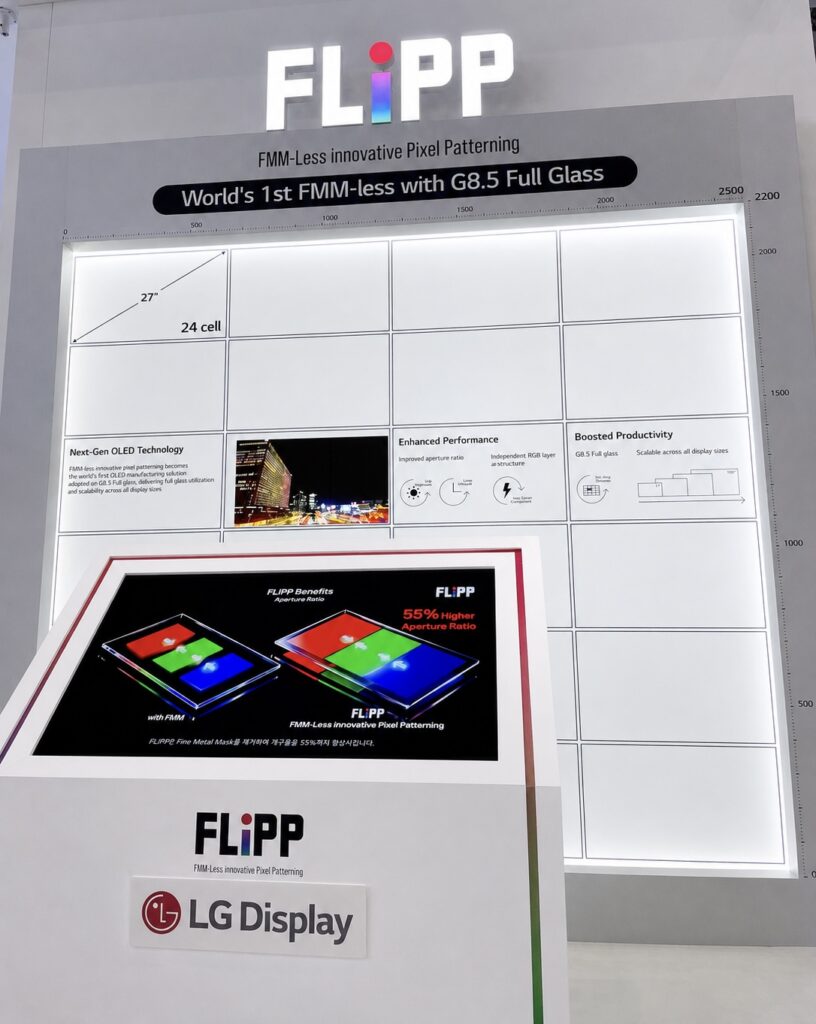
That single-sheet trick is a big deal for efficiency. For laptop-sized screens, LG says this method improves glass utilisation by up to 64% compared to traditional masking or competing maskless methods that still need cut-up sheets. That means far less wasted material, lower manufacturing costs, and more panels squeezed out of every single glass substrate.
Even better, FLiPP is not tied to a specific panel size or pixel density. In theory, it works on anything from tiny 1-inch wearable displays and VR headsets all the way up to giant 100-inch TVs. LG plans to roll this tech out to tablets and monitors first before moving on to other devices, though there is no word yet on when the first consumer product will actually hit the shelves.