


After much rumours, leaks, and anticipation, Apple has officially unveiled its iPhone 17 series, comprising four distinct models: the iPhone 17, the iPhone Air (which replaces the Plus variant), the iPhone 17 Pro, and the iPhone 17 Pro Max.
iPhone 17
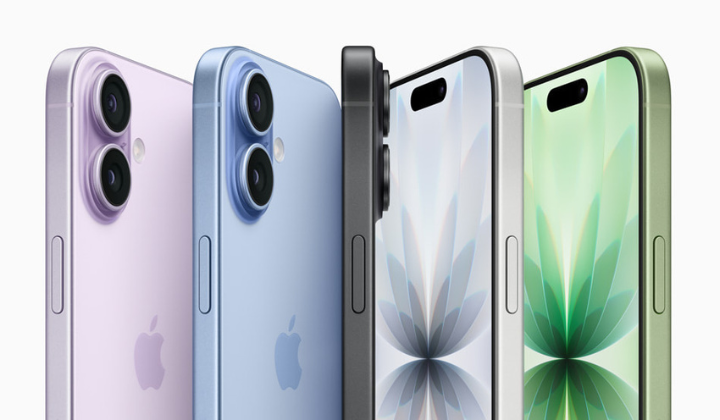
The standard iPhone 17 represents a considerable generational leap, headlined by its new 6.3-inch Super Retina XDR display. For the first time on a non-Pro iPhone, this screen features ProMotion technology with an adaptive refresh rate of up to 120Hz, which also enables an Always-On display.
The front glass is the new Ceramic Shield 2, boasting a proprietary Apple coating that triples scratch resistance and improves anti-reflection to minimise glare. With a peak brightness of 3,000 nits – the highest ever on an iPhone—and twice the outdoor contrast of its predecessor, the screen is a major upgrade.
Power comes from the new 3nm A19 chip, promising up to 30 hours of video playback and the ability to charge to 50% in just 20 minutes with a compatible high-wattage USB-C adapter.
The device also includes the Apple N1 connectivity chip for Wi-Fi 7, Bluetooth 6, and Thread support, enhancing connectivity features like Personal Hotspot and AirDrop. For photography, it debuts a dual 48MP rear camera system on a non-Pro model, featuring a main and an ultra-wide camera with macro capabilities, alongside an 18MP Centre Stage front camera. It is offered in lavender, mist blue, sage, white, and black.
iPhone Air
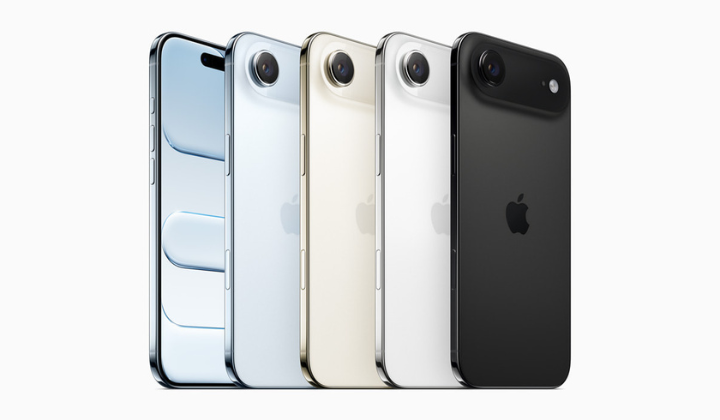
The new iPhone Air is defined by its form factor, measuring just 5.6mm thick to become the thinnest iPhone to date, with a titanium alloy frame to protect the slim body, It houses a large 6.5-inch LTPO Super Retina OLED display with ProMotion and the same Ceramic Shield 2 protection and 3,000-nit peak brightness as the base model.
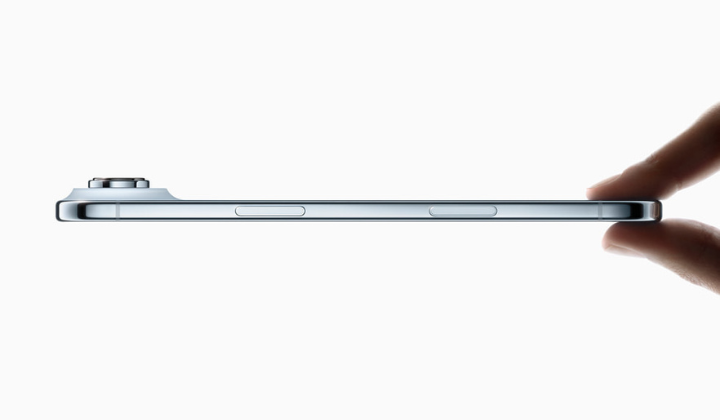
Achieving this slim design involved notable compromises: a single 48MP rear camera, complemented by an 18MP front-facing camera with Centre Stage and a mono-speaker.
It is equipped with the more powerful A19 Pro chip, which Apple claims delivers MacBook Pro-level performance, and shares the N1 connectivity chip. It also introduces the new Apple C1X modem, said to be twice as fast as its predecessor while using 30% less energy. The Air arrives in space black, cloud white, light gold, and sky blue.
iPhone 17 Pro and Pro Max
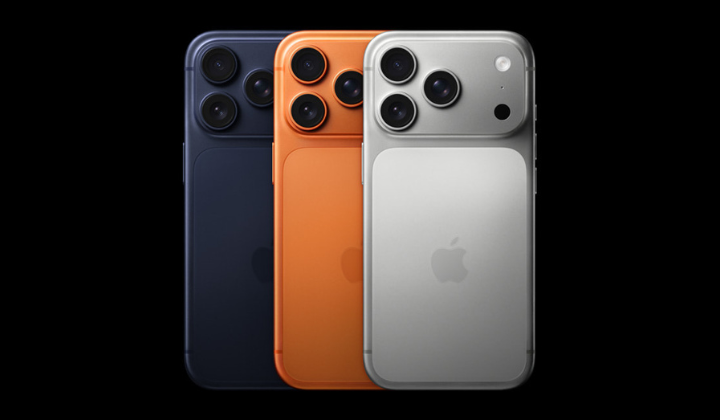
For the Pro models, Apple has moved away from titanium and returned to aluminium, utilising a proprietary Series 7000 alloy that is claimed to be a significant improvement, contributing to 40% better sustained performance.
The iPhone 17 Pro and Pro Max feature a new design with Ceramic Shield glass on both the front and a smaller portion on the rear. The front display glass features a 7-layer anti-reflective coating. The Pro has a 6.3-inch screen, while the Pro Max expands to 6.9 inches; both are ProMotion displays capable of 3,000 nits peak brightness.
The camera system is the most significant upgrade, with all three rear sensors now using 48MP Fusion technology. The telephoto camera is entirely new, featuring a 100mm f/2.8 lens for 4x optical zoom and up to 8x digital zoom. It retains the tetraprism design and sensor-shift stabilisation.
The wide and ultra-wide cameras complete the setup, and a new square 1:1 18MP Centre Stage front camera eliminates the need to rotate the phone for landscape selfies.
Internally, the A19 Pro chipset is paired with a new Apple-designed vapour chamber for improved thermal management. Both Pro models also feature the N1 chip for advanced connectivity.
Pricing and Availability
Pricing for the series sees the iPhone 17 start from RM3,999 for the 256GB model, while the iPhone Air begins at RM4,999 for the same storage.
The iPhone 17 Pro starts from RM5,499 (256GB), with the Pro Max starting from RM5,999 and offering up to 2TB of storage.
Pre-orders open on the 12 September at 8 PM, with general availability beginning on the 19 September.