


Oppo has finally pulled back the curtain on its latest flagship duo, the Find X9 and X9 Pro. Both devices are strutting out with the brand new Dimensity 9500 chipset under the bonnet.

This isn’t just a minor upgrade, either. We’re talking about a chip that boasts a CPU that’s 32% quicker and a GPU that’s 33% faster. The real star of the show, however, might be the NPU, which has seen a massive 111% performance bump. Better still, it’s not just about raw speed; the whole package is far more efficient, with power consumption dropping by over half for both the CPU and NPU.
On both phones, you’re getting 120Hz LTPO OLED screens that can blaze up to 1,800nits across the whole panel, with a peak brightness that hits a searing 3,600nits when you switch on the outdoor mode. For those late-night scrolls, they can also dial right down to a single nit to save your eyeballs. A very welcome quality-of-life upgrade this time is the move to an ultrasonic fingerprint reader, finally retiring the optical sensor from the X8 series.

The standard Find X9 features a 6.59-inch display and has received a truly massive battery upgrade. Its new 7,025mAh cell is a whopping 1,395mAh larger than its predecessor’s. Charging remains at a very respectable 80W wired and 50W wireless, with 10W reverse charging thrown in for good measure.
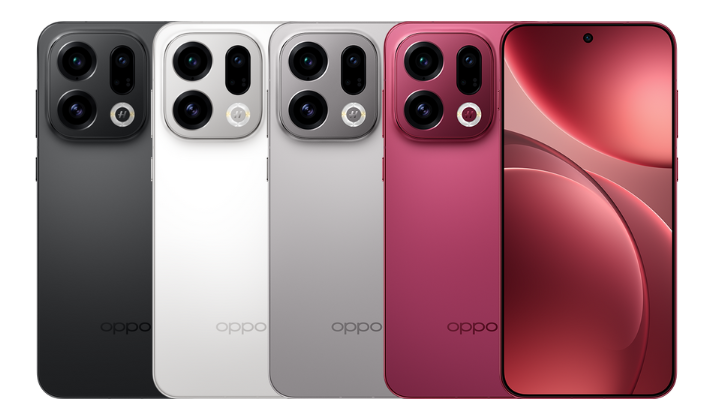
As for the X9 Pro, it sports a larger 6.78-inch display and an even bigger 7,500mAh battery, which is 1,590mAh more than last year’s Pro model. It charges at 90W over a wire, with the same 50W wireless and 10W reverse capabilities. Oppo is so confident in its longevity that it’s promising the battery will retain at least 80% of its health after five years of use.
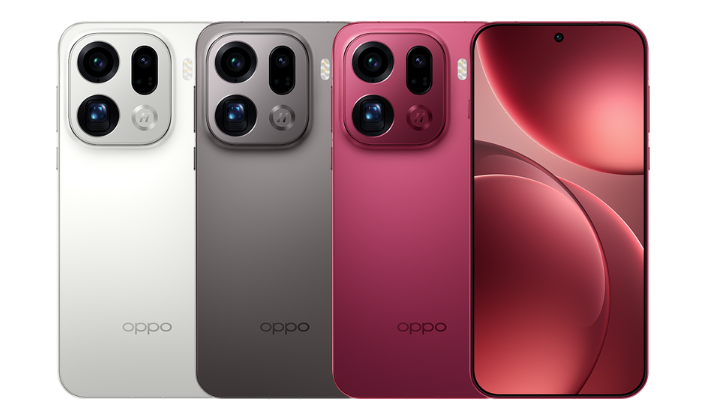
Now, onto the cameras. The X9 Pro is leading the charge with a triple-camera setup. Its main camera uses a 50MP Sony LYT-828 sensor, which is not only larger than the one in the X8 Pro but also a couple of generations ahead. It’s paired with a better f/1.5 lens featuring OIS. Interestingly, Oppo has decided to switch the default shooting mode to full 50MP, moving away from the more common 12MP binning.
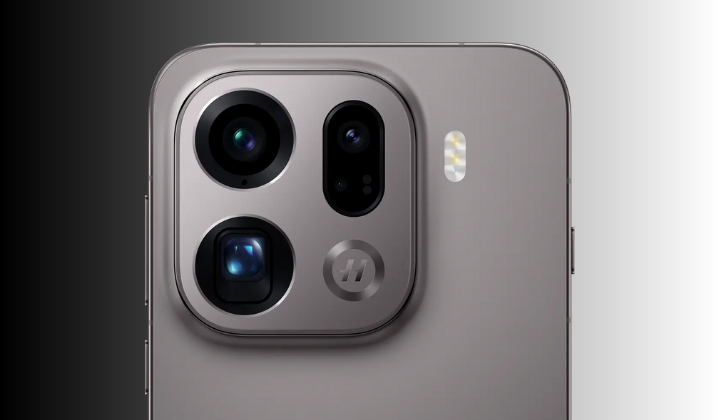
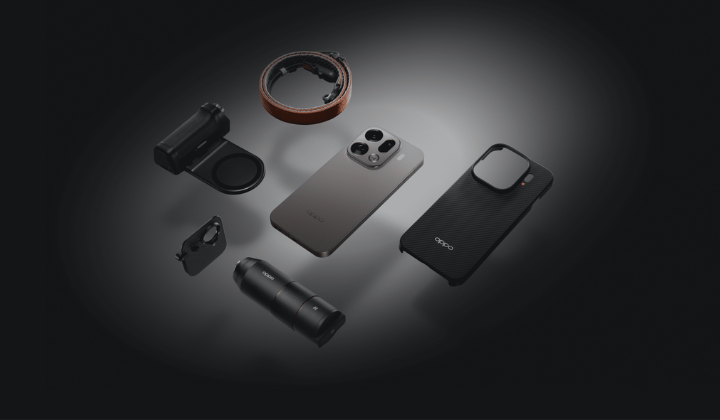
The telephoto camera is a 200MP Hasselblad affair with a 1/1.56” sensor that uses some clever tech like pixel-level calibration and DCG-HDR. It sits behind a certified 70mm f/2.1 lens with a fancy Prism Hybrid OIS system. This is a significant step up from the X8 Pro’s telephoto setup. Oppo has also put a lot of effort into video, offering Motion Photos for short clips and high-quality log mode or Dolby Vision for longer ones. All cameras can shoot 4K 60fps Dolby Vision, with the main and telephoto capable of 4K 120fps. For the true zoom enthusiasts, there’s even a Hasselblad teleconverter accessory for the Pro that boosts the optical zoom to 10x.
The standard X9 isn’t slouching in the camera department either. It gets last year’s Pro sensor, the 50MP LYT-808, for its main camera, which is still a solid upgrade over the X8. It’s joined by a 50MP periscope telephoto and a 50MP ultra-wide. A unique addition is a True Color Camera, a multi-spectral sensor designed to capture colours more accurately.
The whole series launches with ColorOS 16 based on Android 16, and Oppo is committing to a generous five major OS updates and six years of security patches. And for those worried about the elements, both phones come with a full suite of IP ratings for protection against water jets, submersion, and even hot water jets.
If the specs have you tempted, you’ll be pleased to know you won’t have to wait long. The Oppo Find X9 series is set for a global launch on the 28 October 2025.
Pricing and Availability
Pricing for the 12GB + 256GB model kicks off at CNY3,499 (~RM2,075) for the standard Find X9. For those after the top-tier experience, the Find X9 Pro in the same configuration starts at a rather steeper CNY5,299 (~RM3,143).